Monday, June 4, 2012

Great Writing 2012

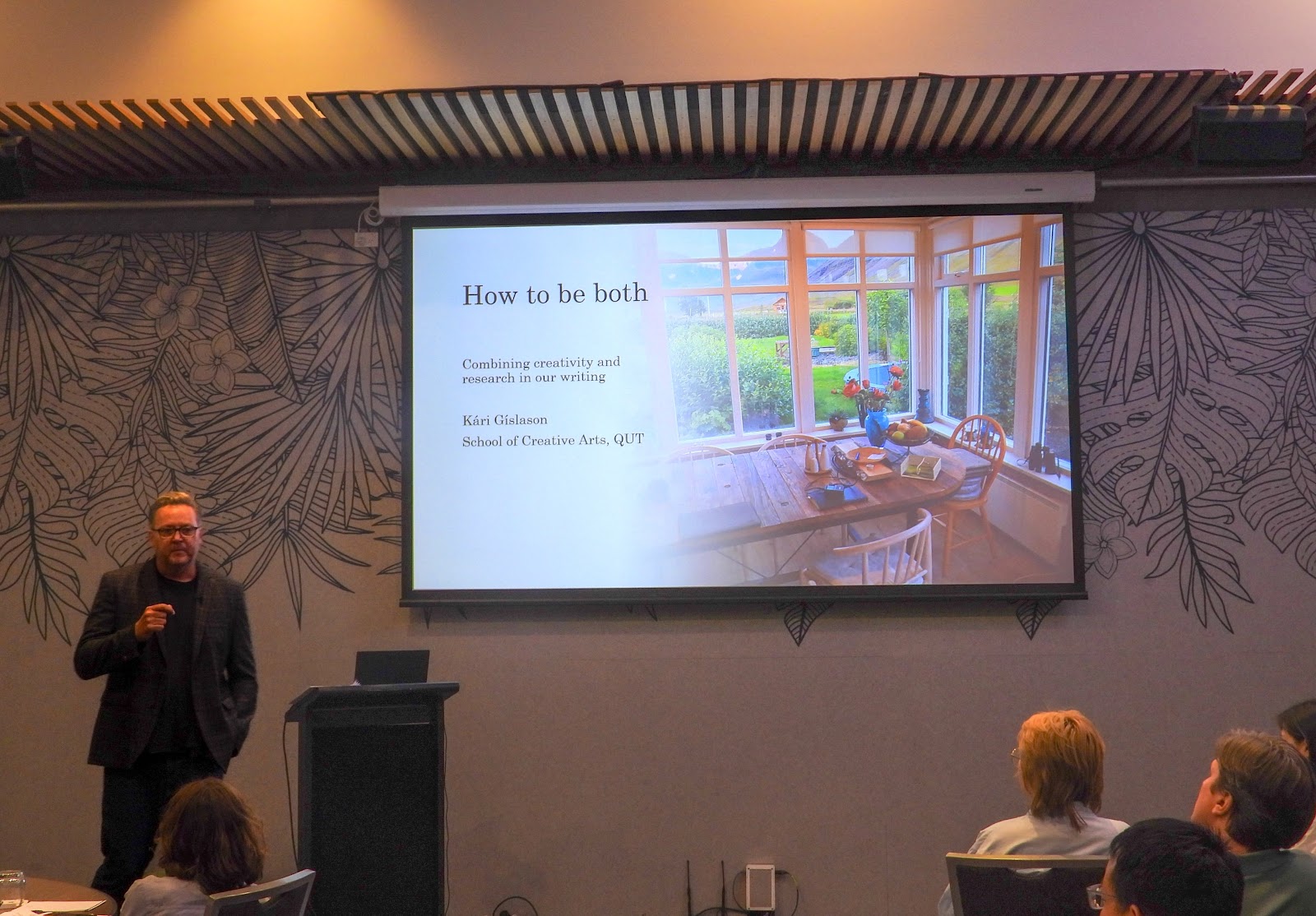
The 2012 programme of Great Writing, an international creative writing conference held at Imperial College London, has been released. The conference runs from June 16-17, and my paper, "Memoirs of Perception", will run along these lines:

In this paper I discuss the narrative structures used to represent perception and reality in two works of memoir, The Periodic Table by Primo Levi and The Year of Magical Thinking by Joan Didion. I then extend the discussion to a comparison with narrative strategies in my own memoir, The Promise of Iceland. I consider how narrative structure may function as a mode of representation in its own right, and not merely as a device by which to deliver the material content of the works. How, for instance, do memoirs use structural devices to represent and replicate modes of perception, and thus relate the form of the memoir to processes of remembering and accounting for the influence of memory in our lives? I suggest that through the elevated use of structuring devices, structure can become a central part of a works’ effectiveness in thematic development around notions of the past and personal changes, because while documenting the inner life, memoir can also offer a method for contemplating perception and memory. As a result, the memoir form functions not only as an account of past events but as an argument about the nature of memory and the possibilities of its representation.

The programme and abstracts are available here.


Friday, June 1, 2012

Writing Bar Review

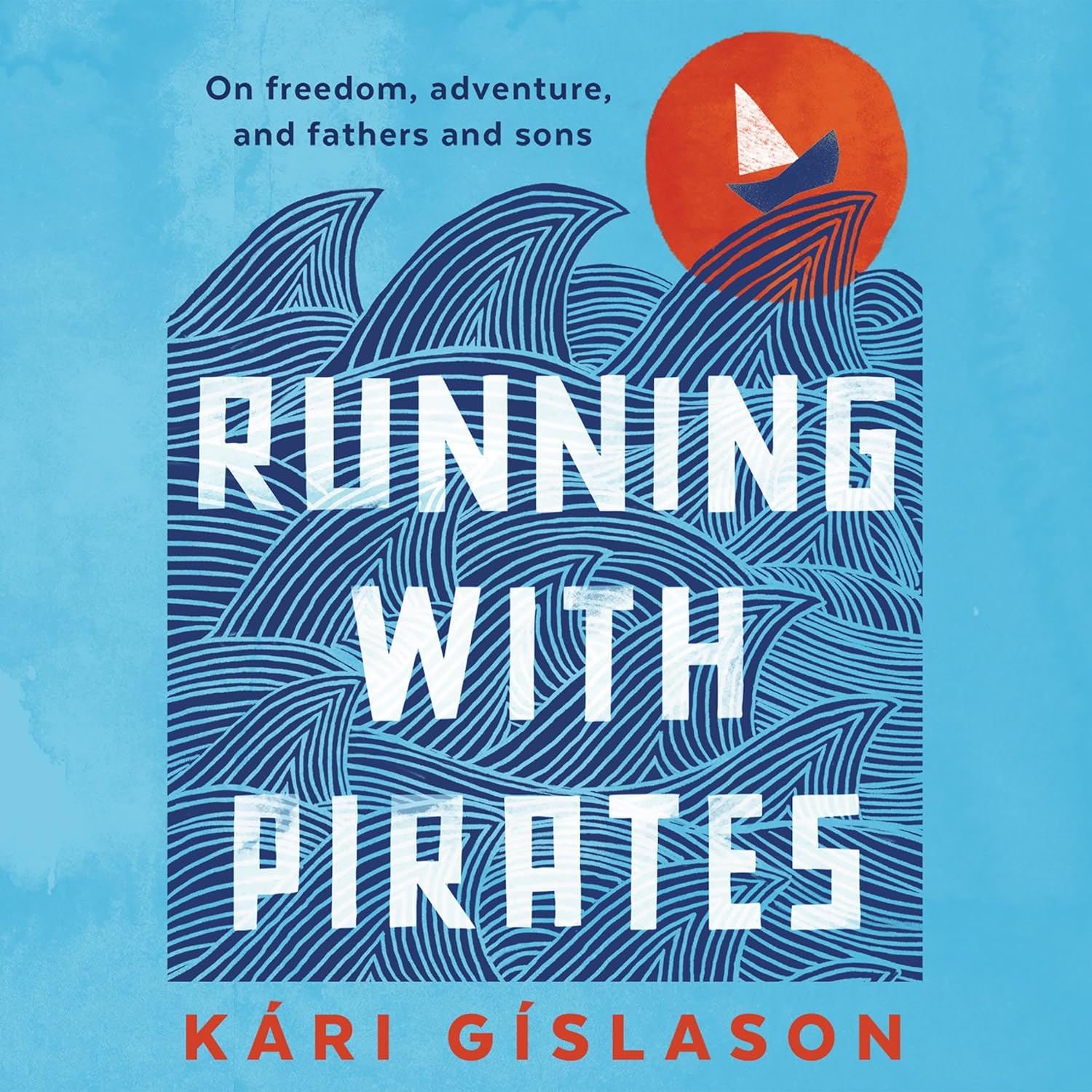
Andrea Baldwin's review of The Promise of Iceland has appeared in Writing Bar, the blog of the Sydney Writers' Centre. Andrea writes:

What stands out for me about this book is the narrative voice. It’s honest, conscientious and, almost to the end, somewhat bewildered. It creates a saga-like feel: the hero is on a difficult quest with which onlookers, however sympathetic, cannot help because he has to do it himself. You feel like cheering when he succeeds.


The review is available in full here.

Sunday, May 27, 2012

Three Locks to Basel

My travel story about a cruise I took from Amsterdam to Basel on the Scenic Crystal's maiden voyage has appeared in Escape (27 May 2012). The piece is structured around the experience of travelling through the last three locks before arriving in Basel, and appears in Escape as "Lazy days of simply going with the flow" (pages 24-25).


Plamen Veselinov, captain of the Scenic Crystal

Friday, May 11, 2012

Stilts Review 2

Well, not quite a review...rather, Sally Breen's lovely open letter to me on the topic of my book The Promise of Iceland: it has been published in Stilts and is available for free here.

Reality Bites

The programme of Reality Bites, a festival of literary non-fiction, has been released and is available here. The festival takes place at Cooroy Library, on Queensland's Sunshine Coast, from 26-29 July.

I will be appearing in two sessions on Sunday 29 July: in "Death and the Patriarch" (with Sally Breen and Ben Robertson), and in a close-up session on the theme of place as a character in its own right in non-fiction writing.


Monday, May 7, 2012

Stilts Review


Krysi Egan's review of The Promise of Iceland has appeared in Stilts. The review, which is available in full here, includes:

With elegance and tenderness, Kari discusses the loves that have defined his life; the love for his intriguing and adventurous mother, the secret and silent love for his father, and the love and longing for Iceland. While painting a spectacularly vivid portrait of the natural beauties of Iceland and its people, Kari explores the complicated nature of how people fall in love, the promises they make, and the reality of what happens when those promises fall apart.

All of those things make this a fabulous memoir, but what makes it unforgettable is the tremendous respect and grace in which Kari tells a story that is only in part his to tell. His sensitive portrayal of his mother as he shares the most intimate and defining moments of his family history is truly a wonder. Whilst a measure of bitterness towards his father would be justifiable and easily forgiven, Kari leaves it off the page, instead focusing on the delicate nature of the circumstances and the ultimate search for belonging.

Wise and unassuming, humorous and remarkably affecting all at the same time, The Promise of Iceland is an enchanting reflection of a fascinating life and a profound exploration of the human condition.

Friday, May 4, 2012

The Art of Vanishing Parents

My open letter to Christopher Currie about his book The Ottoman Hotel has appeared in the online version of Stilts journal. The letter, which is entitled "The Art of Vanishing Parents", is available for free here.

Thursday, March 29, 2012

Letter from a Rainforest, by Bernard Appassamy

Almost every night around dinnertime, our kitchen echoes, beyond the inner city hullabaloo, the modest but no less persistent singing exercises of a nameless neighbour in her backyard. I imagine that others in our vicinity were also initially puzzled if not slightly irritated by the intrusion. Another neighbour went as far as loudly voicing his disapproval in an unmistakable way. But our local diva was not to be intimidated; she has carried on, and we have all grown accustomed to her dusk ritual and notice when she's away.


It has recently been my experience during a holiday in the Northern hinterland that rural life is not as sedate as I had pictured. This was to be my First Contact. I come from tiny and overpopulated Mauritius where almost every square metre is accounted for. The house of my hosts, amongst 50 acres of ‘rainforest in recovery’, was one km from their gate. I was beside myself.

‘Be warned. The accommodation is squalid’. Think wooden shack where my friends slept and corrugated iron shed one hundred meters away where I did. Think shed with no water or facilities. Think tilting door stuck open. Think four brown snakes found inside the shed over the previous twelve months, two meter resident carpet snake in the nearby herb garden, spiders, rats, mice, possums and wandering bears all queuing to snuggle up with me.

I immediately embraced the three dogs, Peggy, Rex and Sammy and bribed them into sleeping in the shed with me. To keep any wildlife away, I gratefully put up with them scratching, farting and poking their wet nose at me through the mosquito net at 3:00 am -- ‘Surely you want to play?’.

5:04 am. Outside, to the left of my bed, a Kookaburra tore through the timid morning. I tossed over, stunned how deafening one single bird could sound. Immediately, the batham rooster from the pen on the right hand side cleared his throat and replied. Soon, the two ducks and their eleven ducklings made their way to the slide and pond. I shoved my earplugs in but in vain, the whole forest was bursting.

I should have guessed about the pit toilet. ‘Shove some straw in once you’re done’. I was not really there. This was not happening. I looked straight ahead, not sideways or down – especially down. I had hardly managed to rest my derrière when the three dogs raced in the toilet (did I mention there was no door?) and jumped on my lap. I roared amidst the choking laughter of my friends in the background.

The menagerie also comprised one cat, three chickens, and three peacocks. One night, I meticulously cleaned the gas barbecue before starting to cook when the male peacock flew to the tin roof above me. I felt flattered that he wished for a closer look of my grilling actions and chatted to him affectionately. He glared at me and, in one brazen tail movement, defecated all over the barbecue. I grabbed the fantastically long country hose and ran after him giving him the shower of his life.

I was taken on a walk beside the river on the property towards the waterfall. My vision of a Merchant Ivory lace parasol promenade tumbled into ‘The Mission’. The water levels had of course tripled since the last floods. We jumped and fell across slippery, wobbly rocks, and were soaked to the waist with our top half drenched in sweat. I scanned my arms and legs anxiously for leeches while the dogs bounced like Cashmere goats. The back of my ears was attacked by mossies. I would have killed for three baklavas. I felt twice my age and wanted to give up. ‘We’ll just leave you to die here’.

Back in Sydney, I settled reluctantly. That holiday within that rainforest felt like being inside something that was both alive and life giving. I measured how much city living takes away from me.

By the end of my sojourn, whilst on the throne, the dogs sat at my feet and I read them our horoscope for the day. At 3:00 am, I capitulated to them and went for a stroll to feel the stars on my face.

I still miss the scents and butterflies. I miss picking the fresh eggs and snake beans. More than anything, I miss that quiet moment when we finally sat to watch the thundering waterfall. These days, when our neighbour starts singing, somewhere in her voice, I can also hear the rainforest.


Bernard Appassamy is a Sydney-based artist and writer. Some of his other work can be found here.

Sunday, March 25, 2012

Sunday Walks

Typically on Sunday evenings I go for a walk along Enoggera Creek, a waterway that runs through The Gap and Ashgrove before it becomes Breakfast Creek and eventually joins the Brisbane River. It's not a busy footpath, at least not at that time of day or at that time of the week, but I'm never alone exactly.

Those out are generally finishing up football games, or walk with that focussed expression of the homeward bound: they've reached their halfway mark and are on their way back.

Walking is the same thing as good thinking. There's movement, yes, but the pace is such that you get to track your own progress: you don't get there without remembering how you got there. It's the opposite of bad thinking, which is when you ponder and confirm the views you reached unaware.

Tonight, as often before, I walked pondering the book I'm writing. When I reached my halfway point I identified a problem I'd been circling for some days, but which I hadn't managed to define - to my surprise, it turned out to be a technical problem to do with why my main character would want to travel from London to Zambia. I thought to myself, 'Yes, of course, I just have to...' and so on.

In the morning, I can make the change, and my character will get to board his flight to Lusaka.

*

In week one of my teaching semester, I ask my students to write a hundred words on the topic, 'Why I Write'. George Orwell wrote to this title once, and we use his piece as stimulus for ars poetica that students write and then can revisit at the end of semester, perhaps even at the end of their degrees.

In a way, it's a hopelessly broad topic. And yet even if it's impossible to define, and even if the response changes often over time, I think it's still worth wondering.

My answer tonight: I write because of moments like this evening, when I am witness to a conversation between my understanding of a project and the task of writing the next section. It's a sort of instruction, from one side of myself to another, that I would call inspiration.

Saturday, March 24, 2012

Craft: Structure & Meaning in Memoir

The Oxford Dictionary of Literary Terms defines memoir as:

A narrative recollection of the writer's earlier experiences, especially those involving unusual people, places, or events. A memoir is commonly distinguished from an autobiography by its greater emphasis on other people or upon events ...and sometimes by its more episodic structure, which does not need to be tied to the personal development of the narrator.

I'd like to expand on this description of memoir by looking at the structure of my own.

The Promise of Iceland is, in something like the way the definition suggests, as much about 'other people and events' as it is about me. Specifically, I wanted to write about Iceland and my parents, even if I did so through myself, that is, even if my imagining of Iceland was the link between my parents and the country where they met.

I also wanted to write on the theme of home. While the book is by nature more narrative than it is argument, and so couldn't in any sense be called an extended personal essay, I nevertheless hoped that the broader questions behind the work would be clear to readers and would frame the personal within the universal: how do we conceive of home, and what role do our parents play in our conception of home as a place or as an idea?

One way of attempting a broader framing is through structure, a technique that can be used as an alternative to the episodic or theme-based approach of memoirs that function more clearly as personal essays, such as for instance The Year of Magical Thinking by Joan Didion, a book that I love and that I teach in one of my undergraduate courses. Didion tells the reader in explicit terms what it is that she's trying to work out - how is our thinking affected by grief - and then comes at the question from a number of angles, each of which is given a chapter that, in a subtle way, marks the progress of her first year of loss.

Yet there is implicit meaning in the Didion as well, in particular around a barely acknowledged dialogue that she is having with her deceased husband John, as part of the progress of writing the book. The first fifty pages or so deal not only with the link between the ordinary and the suddenness of change, but also perform that very change in the structure of the narrative: on the first page we are told of John's death, and so are quite prepared for it, and yet by the end of the first section we're also shocked, as though, like Didion, we didn't really think it could happen, or even has happened. That is, the form not only reflects but in a sense enacts the content.

Given chronologically, the main events in The Promise of Iceland run as follows:

1941: My mother's birth    
1951: My mother's family moves from England to Australia, and then back to England
1956: The family moves to Australia a second time
1957: My mother's parents separate
1961: My mother marries Ed
1969: My mother and Ed separate
1970/71: My mother moves to Iceland and meets my father
1971: My mother falls pregnant; the father is married and she promises not to reveal his identity
1972: I am born, in Iceland
1977: My mother and I move to Sydney
1979: We move back to Iceland and I meet my father for the first time
1982: We move to England, where I attend boarding school
1986: We move to Brisbane, where I finish school
1990: I visit Iceland and, at my father's request, promise that I will also keep safe the secret of his identity
1990-1999: University years, during which I begin a PhD in Icelandic Literature
1999: I visit Iceland and decide to break the promise I made nine years earlier, and so meet my siblings for the first time
2001: I visit Iceland for six months and decide I would like to live there again
2004: I marry and move to Iceland with my wife
2006: Our first child, Finnur, is born in Iceland
2007: We return to Brisbane
2010: My last visit to Iceland, for a family wedding
2011: My father dies

In structuring this story for meaning, I hoped to relate my experiences to a number of ideas:

  • returning to place as returning to the past,
  • family stories as patterns, and home as a kind of story, 
  • the idea of home as related to notions of origin and parenting.

The result was the following order of events:

Click to enlarge

Thus, the memoir begins with a Prologue set in 1990 when, aged 17, I meet my father and repeat a promise that my mother had made nearly twenty years before, not to reveal his identity. The story then moves to 1977, or to the first point when my mother and I have, in a sense, an equal share in the story. So, while being a big jump back in time, I hope it is a natural step in the story established in the Prologue, that is, on the topic of the shared nature of a promise we made to my father. 

After the idea of the promise has been established, both in terms of my own decision as a seventeen year old and in terms how my decision was influenced by my mother, the story moves back further still, to 1941 and my mother's childhood and early life in England and Australia. From there, it narrates how after her marriage to Ed ended she found herself in Iceland, and how she met my father there . Naturally, my intention at this point was to try to catch a full sense of who she was when she fell in love and then fell pregnant. This, I felt, was the necessary context for her decision to protect my father, and my subsequent decision to do so as well.

Chapter 4, 'Paper Run', reintroduces my part as the central strand: I return to the story as a young boy visiting my father. Chapter 5 returns to my mother's story, to 1972 when she gave birth to me. The aim so far has been to link our stories, and through interweaving bring up ideas around the theme of inheritance: secrets, family promises, and a complicated sense of home.

A straight chronological order from chapter 6 onwards reflects that the story is now located almost entirely in my experiences rather than in the drawing of parallels. That is, memoir now moves backwards and forwards along a theme of physical return to Iceland as a way of thinking about our returns to the past. 

The climax of that process comes in September 1999, which is why four chapters are spent in the company of that month. An extended narrative of the outcome of that visit to Iceland occupies chapters 16-20, and culminates in the birth my oldest son, Finnur. The work ends in 2011, with the deaths of my father and my mother's husband Ed. These events, along with my most recent journey to Iceland in July 2010, are given as a closing bracket to the left parenthesis of the Prologue. 

A wider perspective might reveal the following tripartite structure, again bracketed by the Prologue (1990) and the Coda 'Ashes' (2011): 

A) My mother's journey to Iceland (1941-1972) and my childhood and youth (1972-1990) up to the point where we again meet the events of Prologue (1990), when I made the promise to my father;
b) My life after I made the promise until the point when I decided to break it (1990-1999); and
c) Returns I made to Iceland after I'd broken the promise (2000-2010).

In this description of the memoir, the movement in the narrative is essentially one that alternates between  childhood and parenthood, and how these two roles connect around the idea of home. Just as we can choose to become parents - and after which point we're never really our parents' children in quite the same way - so too at some point we must make our own decision about home. Claiming home, and the sense of belonging that comes with it, is part of a  a more mature conception of our parents, one which brings with it a new kind of curiosity about them and, of course, their stories.

Click to enlarge

Saturday, March 17, 2012

Road Markers

Brisbane's suburb of West End houses a wonderful little bookshop called Avid Reader. It's narrow and long, with a café towards the back and an outside area regularly used for book launches and author events. The shop has the habit of employing and so in a sense sponsoring emerging writers.

It was here that I launched my memoir The Promise of Iceland in August last year. This week I have a small piece in the March edition of the bookshop's magazine.

I have embedded the e-version here - my piece, called 'Road Markers', is about my interest in former UN Secretary-General Dag Hammarskjöld. It is printed in the Travel section.


Thursday, March 8, 2012

Cambridge Companion to Creative Writing

The Cambridge Companion to Creative Writing, edited by David Morley and Philip Neilsen, has been published (Cambridge UP, 2012). The Companion includes a chapter by me on travel writing - my central point concerns the mixed nature of travel writing, that is, its capacity to contain a wide range of writing styles.

The Companion is available from the publisher here or through bookdepository.co.uk here.

Friday, March 2, 2012

Gloves

Before I was born
two thumbs were knitted into each hand,
when one was done
you switched it over and the other thumb fitted.

At school, a piece of string
connected one glove to the other
so that when your thoughts were too far gone
on one game or another
you nevertheless came back in with two gloves on.

This is still done.
But it has to be said
gloves are more easily replaced than once they were.
No doubt it is good
that lost gloves become part of the neighbourhood.

They have traced
the cars, the bikes, the rails, and the sodden balls
crossing football fields.
Children own the streets
and gloves belong to the places where they meet.


Saturday, February 4, 2012

Richard Fidler Interview Two

I recently made a return appearance on Richard Fidler's "Conversations" programme: the interview was broadcast on Tuesday 14 February and is available via podcast here.


Tuesday, January 10, 2012

Letter from Mt Fuji, by Sam George-Allen

We leave the Mizunos' house in Saitama at 4am. It's a two-hour trip to Mt. Fuji from outer Tokyo, and we are aiming to get there at dawn. It's early January, seven below zero, and packed into the car are a number of puffy jackets, blankets, snacks, four cameras, Mr. Mizuno, Mrs. Mizuno, my boyfriend James, and me. We are going to the mountain to take photos at dawn.

I am the second generation of clueless foreigners to be taken in by the Mizunos and overwhelmed by their limitless kindness. They met my parents in Sapporo in the late eighties when they both missed the bus to the top ski fields, and adopted them so thoroughly that my grandparents on both sides have met the Mizunos and their children at least once. Now, twenty five years later, they have helped me through my semester at Komazawa Daigaku, booked for me my half-thought-out trip to Hokkaido last summer, acted as guarantor at the start of the lease of my apartment, and seen my Japanese go from intolerably awful to awful. Kaori, their daughter, has a five-year-old, Kanato, and a three-year-old, Hiroto, who apparently love me and will allow me to "teach" them English (lessons usually consist of jumping on and off the bed and describing these actions: "Big jump! Little jump!"). And now they are driving me and my on-holiday, photographically-inclined boyfriend to Fuji-san at four in the morning.

To be fair, for the Mizunos, it is not an infrequently made trip. Mr. Mizuno will, with any excuse, enthusiastically show off the collage of photos he has taken of Fuji, at sunrise, sunset, and in all seasons, with his point-and-shoot. James has brought his DSLR and his baby, a 1952 Rolleiflex twin-lense reflex. It feels like a school excursion. We stayed at the Mizuno's house last night, where Mrs. Mizuno plied us with curry and rice and beer and salad and mandarins and glace chesnuts, drew us a bath in their magnificent, state-of-the-art Japanese bathtub (it reheats the water for you!), and then piled the two cot beds upstairs high with blankets and continued to fuss about whether we would be warm enough (I woke up in a pool of sweat).

There is nothing to see outside. Dawn won't break until 7:13. I fall asleep immediately, feet jammed under James's legs. When I wake up, it's ten to six, and the Prius is bumping down a gravel drive to a parking area by a lake. It's still dark outside, but I can see, as the headlights sweep over them, two rows of cars already parked here, and in front of us at the lake shore, a line of tripods, all alien-legged and silhouetted in the gloom.

It is freezing outside, and the ground is covered in frost. My feet ache instantly. Mr. Mizuno gives me thick nylon pants to put over my jeans, and I wrap myself in the blanket I was sleeping in. The sky over the lake is deep green, and we can see the shadow of the mountain, smooth-sloped and level-topped, a clear, flat shape beyond the glassy water. The lake is surrounded by hills, bare and brown punctuated by solitary evergreens, and the grey morning is crystal clear. We stump down to the water's edge to find a spot. It is a competitor's sport. There are already ten or so cameramen with tripods marking their territory, wrapping their cameras in little blankets and putting hot packs on the mechanisms to keep them from freezing up. There are films of ice stretching out from the gravel shore, and tiny little row-boats drawn up just out of the water's reach. There's still snow in some of them. The pair of photographers next to me mutter to each other; aside from that, it is absolutely quiet. Not even any birds.

Mr. Mizuno has disappeared to find a better spot. James is flitting from boat to boat, trying to find a flat platform on which he can rest his Rollei for a long-exposure. Mist rises off the lake in great wreaths near the opposite shore. It's so still, the water so calm, and as the sky lightens and the mountain's edges crisp up, so does its reflection. It is a perfect double. I begin to understand the love people here have for Fuji-san. The guy who painted those three hundred or whatever views of it, the cartoon Fujis on the maps of the shinkansen routes, the Fuji-shaped cups, hats, bakery products--it deserves its status as a national icon. This perfect cone volcano, huge and flared like a trumpet bell, its top dusted with snow year-round--as it comes into view, it doesn't seem real. It looks like a photocopy of a colour picture, pasted to the sky. I can see the rivers of snow reaching down its flanks like veins. It's strange to finally be here, after a year of plodding away at real life in Tokyo. I will be going home soon. The Mizunos would never let me leave without seeing the spiritual heart of Japan.

Behind me, James is receiving advice from two of the seasoned photographers. James doesn't speak Japanese. I go to translate. The men are baffled as I relay their advice (he should use a tripod, or his shaky hands will blur his Rollei's pictures). A white girl understanding Japanese is unusual enough; a white girl translating for someone who looks like a local is maybe a bit much to handle, at 6:30 in the morning.

The sun is due to rise over Fuji's left-hand edge, near the bottom of the slope. The birds have finally started up--crows, mainly, their ragged calls puncturing the brightening morning. I take a photo just before there is a breath of wind, and Fuji's reflection is scattered. It's beautiful, the shattering light blurring the edges, and the lake water lapping under the ice. Later, cause unseen, a series of sizeable ripples approaches, warping the reflection evenly. One of the photographers springs to catch the image before the returning waves muddle it. The mist over the lake breathes side to side, and a single tuft of cloud treks from one edge of the horizon to the other (later, Mr. Mizuno will say it was 'kirei sugiru'--too pretty, too clear; it's better with a few clouds). 


I am still swaddled in my blanket like a baby. Mrs. Mizuno comes down from the car with bundles of clothes and insists on James putting on a puffy jacket under his coat. She forces me into a green fleecy and a pair of gloves, and then goes to find Mr. Mizuno. My feet have lost all sensation. I give up jumping up and down and huddle under James's arm. He points behind us: the top of the hills have flushed vividly. The top of Fuji, too, catches a shaft of red light. Faint cloud clinging to the peak like a breath glows pink. The sun is coming. The people on the shore stride back to their cameras; affirmations and warnings of readiness are exchanged. At the base of Fuji's left-hand flank, the sky is brightening.

Soon, our sixty seconds of photographic opportunity will rush up on us, and the sun will pop over the mountain side like a ball on a string. But now, hands warm in Mrs. Mizuno's gloves, surrounded by old dudes with fingers on shutter-buttons, holding their breath, I let the morning twilight seep into me. Pale-blue, clear, the sun hinted at but hidden, and Fuji-san crisp and austere before me, like watercolours on Japanese silk.


Sam George-Allen is an Honours student in Creative Writing at QUT.